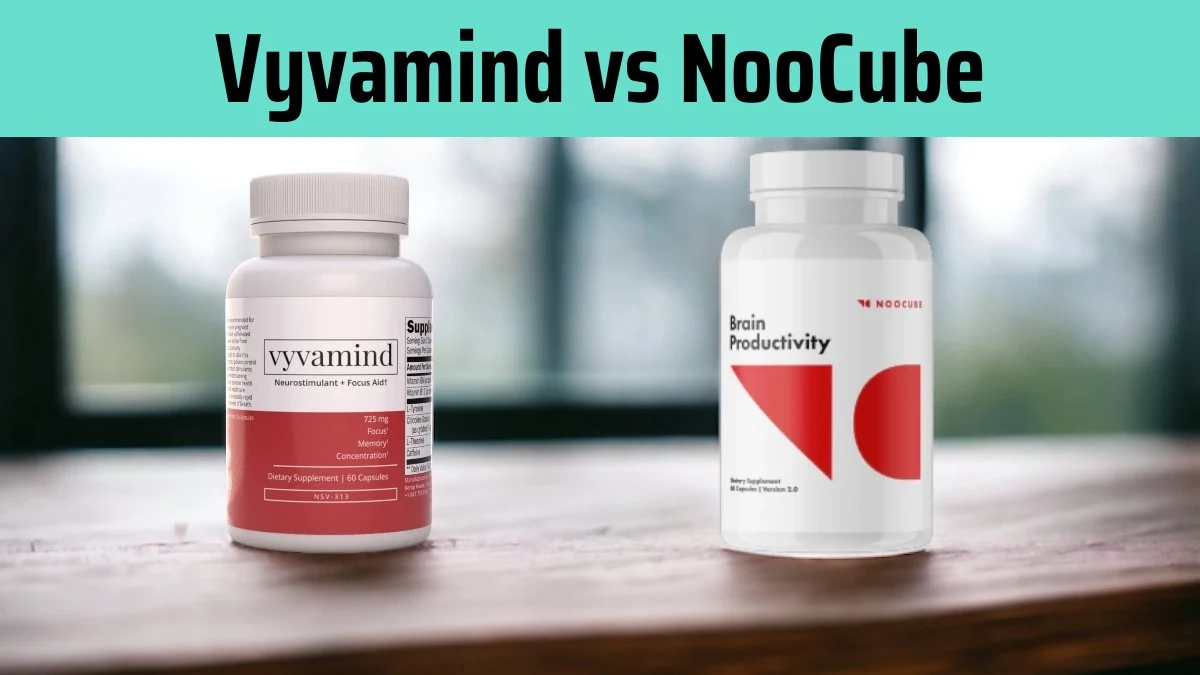

Vyvamind vs. NooCube: A Clear-cut Brain Booster Comparison!
When it comes to picking the right brain supplement, the choices can be overwhelming. Today, I am focusing on Vyvamind and NooCube and putting these two big players head to head. I’ve tested both before, can confirm that they’re both good products and am very familiar with them. However, I thought that it would be a great test to put them side by side in a head to head test, as they are both very popular in the market. Could there be an outright winner and which one could be the right one for you? Vyvamind is produced by SAP Nutrition and NooCube is a product of Wolfson Brands. Let's start with the basics. Vyvamind's ingredient list showcases things like L-Tyrosine, Citicoline, and a bit of Caffeine. On the other side, NooCube offers a mix that includes Bacopa Monnieri, choline, and something called LuteMax 2020. In this review, I’m going deep. I will take each ingredient, see what it does, and check out how much of it is in each pill. Plus, I will put each product directly to the test to see how they stack up in real world testing. Read on to find out which supplement might be the perfect companion for your brain health goals!!
Nootropic Claims:
Vyvamind:
Vyvamind positions itself as a potent nootropic supplement, offering a range of cognitive benefits. The brand claims it can deliver "unparalleled focus and clarity", seeking to eliminate mental fatigue and supercharge cognitive faculties [1]. Beyond this, Vyvamind suggests that users will experience a surge in motivation and drive, facilitating deeper thought processes and problem-solving capabilities while still ensuring restful sleep. Furthermore, Vyvamind touches upon mental well-being, hinting at it’s potential in stress and anxiety management, asserting protection for the brain to support mental well-being [2]. The brand doesn't stop there. They promote an immediate onset of brainpower boost and argue for its efficacy in warding off cognitive burnout. Reviewing it’s ingredient list, which includes L-Tyrosine, Citicoline, and L-Theanine, amongst others, I can certainly see the potential for some of these claims.
NooCube:
NooCube, another entrant in the crowded nootropic market, offers a series of bold promises. The brand positions it’s supplement as a tool to achieve "razor-sharp focus" and improve one's ability to tackle complex problems [3]. Additionally, they emphasize a potential enhancement in memory and overall mental alertness. A unique claim sets them apart: protection against "screen fatigue," the weariness one feels after prolonged exposure to digital screens. Furthermore, NooCube promises to clear the infamous "brain fog" associated with exhaustion. Underpinning these claims is the brand's emphasis on "science-backed ingredients." A glance at their formula reveals a mix of familiar and less-known components, such as Bacopa Monnieri, known for its cognitive benefits, and LuteMax 2020, presumably for eye health [4].
Testing experience
Vyvamind: focus and clarity
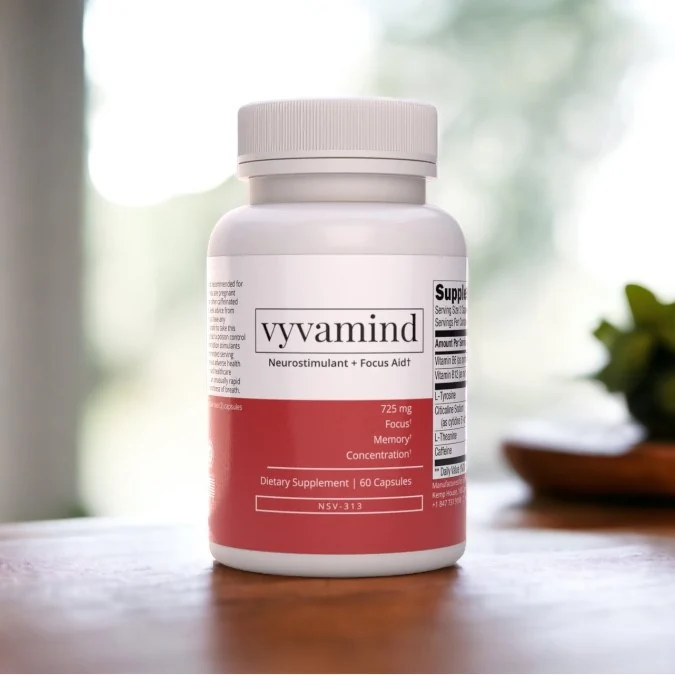
Nootropics, or "brain boosters" as they're colloquially known, often arrive with a suite of lofty promises. My recent rendezvous with Vyvamind, a supplement garnering attention for it’s claims, provided an intriguing experience, painting a largely favourable picture, albeit with nuances worth exploring.
Claim 1: Unparalleled Focus and Clarity - The standout ingredients here were L-Tyrosine and Citicoline [5,6]. From my experience, a heightened sense of clarity during demanding tasks was discernible. It felt like the cognitive fog that sometimes plagues a mid-afternoon work session was held at bay.
Claim 2: Energy and Anti-Fatigue - Here's where the Caffeine and Vitamin B12 come into play [7,8]. True to form, my days felt longer and more energetic. The often-elusive sensation of 'harnessing maximum brain power' did, on certain days, seem within grasp.
Claim 3: Increased Motivation and Drive - The intrinsic motivation to "do" was somewhat amplified. Tasks that previously seemed daunting became approachable. However, this could also be linked to the general boost in energy and clarity, blurring the lines between individual benefits.
Claim 4: Stress and Anxiety Support - L-Theanine, often found in green tea, is known for its relaxation effects [9]. Although Vyvamind doesn’t position itself as an anxiolytic, a gentle, calming effect was noticeable, especially alongside the energizing caffeine.
Claim 5: Rapid Onset and Longevity - The product did kick in swiftly, likely thanks to its caffeine content [10]. But I felt that the promised longevity was a bit of a mixed bag. While the mornings and afternoons were characterized by heightened awareness, evenings not so much.
Claim 6: Advanced Burnout Protection - While the product combats mental fatigue, it’s essential to note that no supplement can fully "prevent" burnout. Healthy work habits and self-care remain paramount [11].
My primary observation is that Vyvamind is an effective nootropic in the domains it targets. However, it’s ingredient profile could benefit from a broader spectrum to achieve full nootropic potency [8]. While it shines for me in enhancing focus, energy, and offering stress support, avenues for improving memory, mood modulation, and neuroprotection remain untapped [12,13]. Vyvamind seems to be a competent nootropic. It’s real-world effects echo many of its claims, even if it’s scope seems somewhat limited. It's a worthy consideration for those looking to try cognitive enhancement, although I would still consider broader formulas.
Pros:
Focus and clarity: With ingredients like L-Tyrosine and Caffeine, Vyvamind is formulated to enhance focus and mental clarity.
Energy boost: The presence of Caffeine can provide an immediate energy boost, potentially alleviating mental fatigue.
Support against stress: L-Theanine is known for promoting relaxation without drowsiness, potentially offering stress and anxiety support.
Potential for enhanced motivation: Components like L-Tyrosine and Citicoline might boost motivation and drive.
Cons:
Limited ingredient spectrum: Compared to some other nootropics, Vyvamind has a narrower ingredient profile.
Caffeine concerns: While Caffeine can provide an energy boost, it can also lead to jitteriness or insomnia in some individuals.
Claim vs. experience gap: While the product makes several promising claims, individual experiences might vary, and not all users may achieve the advertised benefits. It was good for me but this is still worth flagging.
NooCube: I found it to be a more comprehensive experience:
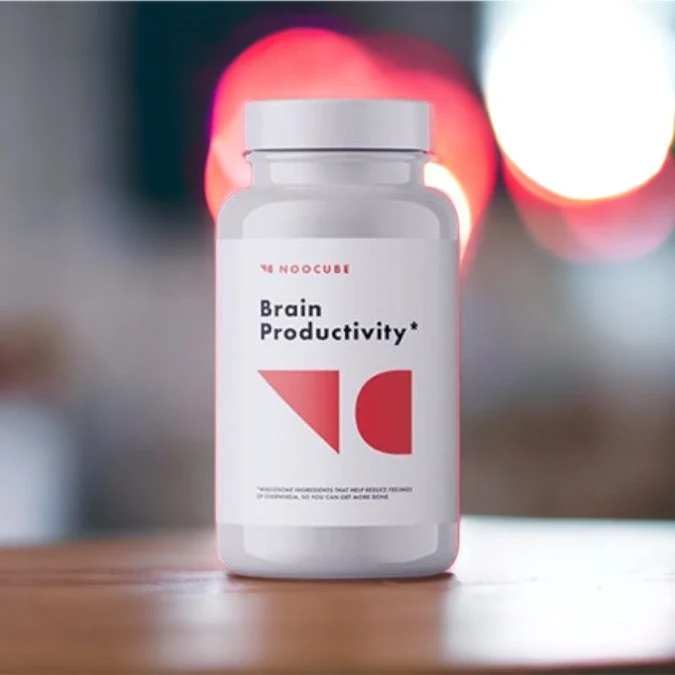
I recently tested NooCube's promises, with a clear understanding of it’s ingredient list. The test was informative and the amount of research I had done really paid off.
Claim 1: Razor Sharp Focus - It's not hyperbolic to say my attention rivalled that of a hawk eyeing its prey. L-theanine and L-tyrosine, both integral components of NooCube [14,15], are known to synergistically enhance attentional networks. Their presence in the blend seemed to curate an environment of intense concentration.
Claim 2: Improved Problem-Solving Skills - I often grapple with intricate cognitive challenges, and during my NooCube regimen, the haze often clouding my analytical abilities felt dispersed. The credit here likely goes to Bacopa Monnieri, renowned in traditional medicine for boosting cognitive processes [16].
Claim 3: Memory & Alertness Improvement - During this trial, my ability to recall information seemed much better. Recalling detailed information felt more intuitive, almost like flipping through pages of a well-indexed book.
Claim 4: Shield Against "Screen Fatigue" - This is where LuteMax 2020 comes to the forefront, being a potent agent in protecting our ocular assets from digital strain [19]. Those marathon screen sessions seemed less daunting, with my eyes feeling significantly less fatigued.
Claim 5: Dispelling Brain Fog - The sensation of a weight being lifted off the cognitive centres was pretty noticeable. Ingredients like Pterostilbene and Resveratrol are known combatants against neuroinflammation [20,21], which is often linked to mental lethargy.
Claim 6: Science-backed Ingredients - Indeed, NooCube's composition is not just a random assortment. Each ingredient carries a legacy of scientific validation, from the neuroprotective Cat’s Claw [22] to the staple Vitamin B12 that supports optimal neural function [23].
What sets NooCube apart for me is it’s broad spectrum ingredient profile. It contains a mix of ingredients intended to offer a broad range of nootropic benefits, covering more than one or two cognitive functions. While some nootropics target specific functions, NooCube felt broader in its effects, enhancing a range of cognitive functions. In summary, my experience with NooCube was very positive. It stays true to it’s claims, with real-world experiences that echo it’s promises. For anyone on the hunt for a comprehensive cognitive enhancer, NooCube deserves serious consideration. It’s no surprise that I can feel it edging ahead in this head to head comparison.
Pros:
Broad spectrum of ingredients: NooCube contains a variety of ingredients known for their cognitive benefits, including L-theanine, Bacopa Monnieri, and choline.
Science backed ingredients: Many of the ingredients in NooCube, like Bacopa Monnieri and LuteMax 2020, have been researched and show potential cognitive benefits.
Protection against screen fatigue: The inclusion of LuteMax 2020 specifically addresses the modern-day issue of screen-related eye fatigue.
Improved focus: Ingredients such as L-tyrosine are known for their capacity to enhance focus and concentration.
Memory enhancement: The formula contains ingredients researched for their potential roles in memory.
Reduction in brain fog: Ingredients like Pterostilbene and Resveratrol combat neuroinflammation, which can contribute to clarity of thought.
Comprehensive cognitive enhancement: Beyond just focus or memory, NooCube attempts to cover a wide range of cognitive functions.
Cons:
Stimulant-free: No caffeine may not suit all users.
Ingredients and evidence
Vyvamind
L-Tyrosine (300 mg), Citicoline (200 mg), L-Theanine (150 mg), Caffeine (75 mg), Vitamin B6 (2.5 mg), Vitamin B12 (50 mcg)
L-Tyrosine (300 mg in Vyvamind) Evidence: L-Tyrosine has been found to improve cognitive performance in situations of stress and sleep deprivation [24]. Dosage: Studies often employ a range of 150 mg/kg to 500 mg/kg, which would translate to 10,500 mg to 35,000 mg for a 70 kg individual [25]. In contrast, Vyvamind provides a more conservative 300 mg dosage.
Citicoline (200 mg in Vyvamind)Evidence: Citicoline has been shown to enhance memory and protect the brain against degenerative diseases [26].Dosage: Therapeutic dosages in clinical trials range from 500 mg to 2000 mg daily [27]. The 200 mg in Vyvamind falls below this range.
L-Theanine (150 mg in Vyvamind) Evidence: L-Theanine, commonly found in tea leaves, promotes relaxation without drowsiness, and when combined with caffeine, can improve attention [28]. Dosage: Many studies use dosages between 100 mg to 200 mg, so Vyvamind's 150 mg aligns with this range [29].
Caffeine (75 mg in Vyvamind) Evidence: Caffeine is renowned for its ability to increase alertness and improve cognitive performance [30]. Dosage: For cognitive benefits, studies typically administer doses ranging from 40 mg to 300 mg [31]. The Vyvamind dosage falls within this range.
Vitamin B6 (2.5 mg in Vyvamind) Evidence: Vitamin B6 plays an essential role in neurotransmitter synthesis and may enhance memory and cognition [32]. Dosage: While the recommended daily allowance varies between 1.3 mg to 2.0 mg, doses for cognitive benefits in studies can be higher [33]. Vyvamind provides a slightly increased dosage of 2.5 mg.
Vitamin B12 (50 mcg in Vyvamind) Evidence: B12 is crucial for nerve function and the formation of red blood cells. Deficiencies can lead to memory deficits and other cognitive dysfunctions [34]. Dosage: The recommended daily allowance is around 2.4 mcg, but higher doses, up to 1000 mcg, have been used in studies examining cognitive benefits [35]. Vyvamind's 50 mcg is above the RDA but well below higher therapeutic doses.
My analysis concludes that Vyvamind incorporates ingredients with scientifically backed nootropic benefits, the dosages of certain components like L-Tyrosine and Citicoline might be on the lower end compared to some research studies. Nonetheless, the combined effect of these ingredients seems to produce a synergistic benefit.
NooCube:
LuteMax 2020, Bacopa Monnieri (250mg), Pterostilbene (140mcg), Resveratrol (14.3mg), L-theanine (100mg), L-tyrosine (250mg), Choline (100mg from 250mg choline bitartrate), Panax Ginseng (20mg extract), Cat’s claw, Vitamin B1 (1.1mg), Vitamin B7 (50mcg), Vitamin B12 (2.5mcg)
LuteMax 2020 Evidence: This ingredient aims to combat eye strain and enhance visual performance, specifically addressing the damage caused by blue light exposure [36]. Dosage: Recommended dosages vary, with studies often utilizing proprietary blends. A direct comparison with NooCube's concentration isn't therefore straightforward.
Bacopa Monnieri (250mg in NooCube) Evidence: Bacopa is lauded for it’s memory-enhancing effects, demonstrated in several human studies [37]. Dosage: A common dosage used in research is 300mg daily of a Bacopa extract [38]. NooCube's 250mg is close to this benchmark.
Huperzine A: It is not listed in the current NooCube formula. The original reference to 20mg of Huperzine A is incorrect and should not be used as dosage guidance.
Pterostilbene (140mcg in NooCube) Evidence: This is a powerful antioxidant linked to cognitive enhancement and anti-aging benefits [40]. Dosage: Human studies have used doses ranging from 50mg to 250mg [41]. NooCube's 140mcg is significantly below this range.
Resveratrol (14.3mg in NooCube) Evidence: Known for it’s antioxidant properties, it may improve memory and cognitive function [42]. Dosage: Studies have used a wide range of dosages, from 10mg to 500mg daily [43]. NooCube's 14.3mg falls on the lower end of this spectrum.
L-Theanine (100mg in NooCube) Evidence: This amino acid, found in tea leaves, is linked with relaxation without drowsiness [44]. Dosage: Research typically utilizes dosages between 100mg to 200mg, aligning NooCube's 100mg with the lower bound [45].
L-Tyrosine (250mg in NooCube) Evidence: Supports cognitive function, particularly in stressful situations [46]. Dosage: Studies often use 150 mg/kg to 500 mg/kg [47]. NooCube's 250mg is a conservative dose compared to such body-weight-based dosages.
Choline: The current NooCube formula lists 100mg choline from 250mg choline bitartrate. This is not the same ingredient as Alpha GPC, so the Alpha GPC studies cannot be directly applied to this amount.
Panax Ginseng, Cat’s Claw, Vitamins B1, B7, and B12 Evidence: These ingredients have diverse benefits, from supporting brain health to enhancing immune response[50,51]. Dosage: The current label states individual amounts, which should be compared with the specific forms and doses used in research.
My analysis concludes that NooCube incorporates a rich blend of ingredients with recognised nootropic properties. While most ingredients align with research-based dosages, others, such as Pterostilbene, are more conservatively dosed.
Potential side effects of these ingredients:
Vyvamind
1. L-Tyrosine (300 mg) Side Effects: L-Tyrosine is generally well-tolerated. However, in some instances, it may cause nausea, headache, fatigue, or heartburn [52].
2. Citicoline (200 mg) Side Effects: Citicoline might cause stomach upset, headache, diarrhoea, low or high blood pressure, nausea, blurred vision, or chest pains in some users [53].
3. L-Theanine (150 mg) Side Effects: L-Theanine is considered very safe. Some users might experience headaches or dizziness [54].
4. Caffeine (75 mg) Side Effects: Caffeine, even at low doses, can lead to insomnia, nervousness, restlessness, stomach upset, nausea, rapid heart rate, or muscle tremors [55].
5. Vitamin B6 (2.5 mg) Side Effects: Excessive intake might cause nerve damage, painful skin patches, sensitivity to sunlight, or nausea [56].
6. Vitamin B12 (50 mcg) Side Effects: B12 is generally safe, but very high doses can cause dizziness, headache, anxiety, nausea, or skin rashes [57].
NooCube
1. LuteMax 2020 Side Effects: Specific side effects of LuteMax 2020 are not well-documented, but lutein and zeaxanthin (it’s main components) are typically safe. Overconsumption may lead to yellowing of the skin [58].
2. Bacopa Monnieri (250mg) Side Effects: Might cause stomach cramps, dry mouth, nausea, and fatigue [59].
3. Huperzine A: Not listed in the current NooCube formula, so the original ingredient-specific side-effect discussion does not apply to this formulation.
4. Pterostilbene (140mcg) Side Effects: Generally well-tolerated but might lead to increased cholesterol levels in some people [61].
5. Resveratrol (14.3mg) Side Effects: Can cause stomach problems, diarrhoea, and liver dysfunction if consumed in high amounts [62].
6. L-theanine (100mg) Side Effects: Can occasionally cause headaches or dizziness [63].
7. L-tyrosine (250mg) Side Effects: Rarely, might cause nausea, headache, fatigue, or heartburn [64].
8. Choline: The current formula uses choline bitartrate rather than Alpha GPC. Tolerability needs to be assessed for the actual ingredient and amount on the label.
9. Oat Straw Side Effects: Typically well-tolerated, but allergic reactions can occur in some [66].
10. Cat’s Claw Side Effects: Can lead to dizziness, vomiting, or headaches in some individuals [67].
11. Vitamin B Complex Side Effects: Generally safe, but excessive intake can cause several side effects including nerve damage or skin reactions [68].
My overall recommendation: the winner is NooCube but Vyvamind runs a close second:
Vyvamind just has a more narrow focus: Streamlined for focus and clarity using core ingredients, ideal for short-term cognitive boosts.
Vyvamind has a few limitations: It’s selective formula doesn't deliver the same range of cognitive benefits as NooCube. This is reflected in its use of fewer ingredients and a much smaller overall serving size of 1 capsule per day (vs NooCube's 3 capsules per day).
NooCube offers a broader spectrum of cognitive support: It combines multiple nootropics, ensuring full cognitive support from focus to memory and overall brain health.
NooCube has a really strong scientific foundation: It not only claims but proves real world effectiveness with solid research, which really mirrors my firsthand experiences.
My recommendation: For a comprehensive and trusted nootropic experience, NooCube is our preferred choice.
Both Vyvamind and NooCube are effective cognitive enhancers. Each designed with the promise to boost mental agility, memory, and focus, yet my exploration did reveal contrasting experiences. In fact, it could all come down to which one is right for you?
I did find that, whilst still very effective, that Vyvamind is held back by a few limitations. The blend of ingredients in Vyvamind is somewhat limited in it’s diversity. While ingredients such as L-Tyrosine and L-Theanine are well-recognized for their cognitive benefits [69,70], the blend overlooks the inclusion of potent nootropics like Bacopa Monnieri, which has substantial evidence backing its efficacy [71]. In addition, at 75mg, the caffeine content may pose issues for sensitive individuals, potentially leading to jitters or sleep disturbances [72]. I also found that some ingredients, like Citicoline, are present in suboptimal dosages. Optimal cognitive benefit often arises from a synergistic blend, requiring each component to be in a precise, effective dosage [73].
Drawing from a more varied list of ingredients, NooCube captures the essence of a balanced nootropic. The inclusion of potent ingredients such as Bacopa Monnieri, known for improving memory and recall [74], and choline, which is essential for normal cognitive functions, provides a broader spectrum of cognitive enhancement. NooCube's formula led to me experiencing enhanced cognitive performance, sharper memory recall, and improved focus. LuteMax 2020 has been studied for visual and cognitive outcomes. Huperzine A is not listed in the current NooCube formula.
Given the comprehensive nature of NooCube's ingredients, the product offers a more robust approach to cognitive enhancement. While Vyvamind has it’s merits for sure, the potential drawbacks, particularly the reliance on caffeine, set it a notch below for me. For those seeking a heightened level of cognitive performance and recall, my experience leans towards NooCube.
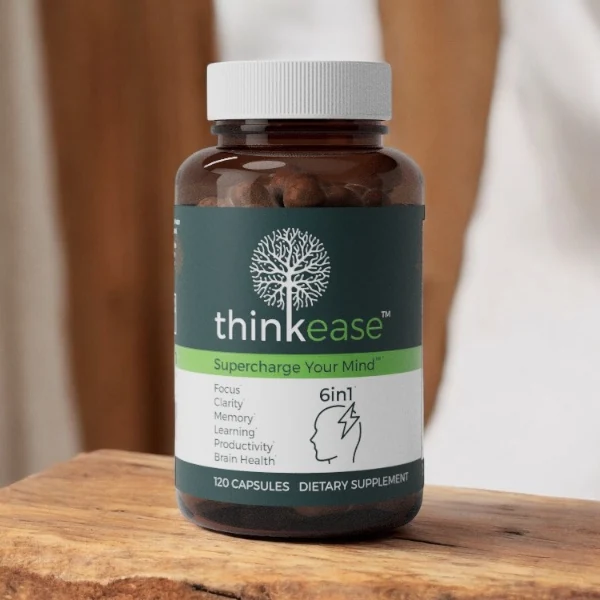
Beyond these two products, ThinkEase is my preferred alternative for readers who want a broad, caffeine-free formula with individually stated amounts. It includes 300mg Bacopa Monnieri, 250mg Citicoline, 200mg L-Theanine and 550mg Lion’s Mane, alongside other ingredients. This preference is based on the formula; the personal experiences described above concern Vyvamind and NooCube.