Here is my review of Thesis nootropics where I thoroughly examine the brand and it’s products. Thesis positions itself as a customized solution within the competitive sphere of cognitive supplements, offering a range of products each formulated to enhance specific aspects of mental performance. With intriguing labels like Energy, Clarity, and Creativity, each of their six blends aims to boost cognitive functions through a precise combination of ingredients. My objective here and also the goal of my review is to critically evaluate the product and these claims. The killer question at hand is whether these carefully measured ingredients, such as 300mg of Zynamite® for an energy increase or 500mg of Lion’s Mane extract for improved clarity, genuinely fulfil their promises and provide real life benefits. Thesis says that their formulas are not merely a random assortment of ingredients; they are a well-planned collection of nootropics designed to work synergistically for optimal effect. So let’s see. I’ve also carried out a lot of scientific research into these ingredients, so am aiming to give the best possible evaluation. To assess these assertions and the benefit seen in the real world, I have conducted an additional nine months of product testing. My approach includes direct experimentation with the supplements, alongside a detailed investigation of each ingredient. I'll focus on the effectiveness of these ingredients in their specified doses and whether they meet the expectations set by the brand. Does scientific evidence back these claims? Are the effects perceptible and beneficial? In my evaluation, I will also compare Thesis products with other nootropics available in the market, offering a comprehensive view of the options. By integrating these new insights from my extended testing period, I aim to provide a thorough and updated review of Thesis nootropics. My goal is to give you a clear understanding of how these products perform and how they measure up against their competitors.
Just what are Thesis nootropics?
Thesis nootropics offers a personalized approach to cognitive enhancement, setting itself apart from the generic solutions prevalent in the supplement market. The brand emphasizes customization, creating nutrient compounds tailored to enhance mental performance in alignment with an individual's unique cognitive goals and biological profile. The process begins with an online assessment designed to capture your cognitive baseline and specific objectives. Based on this, Thesis recommends a Starter Kit, allowing users to try four of their six pre-formulated blends over a month. These blends, such as Energy, Clarity, and Motivation, are named after the cognitive benefits they claim to provide and include ingredients like the adaptogen Ashwagandha and the amino acid L-Tyrosine, each with carefully measured doses intended to optimize brain function. Thesis also provides the assistance of a wellness coach, who helps users navigate their experience with nootropics and suggests adjustments to the blends based on individual feedback.
Their claims are ambitious which is both impressive yet also raises a level of suspicion as to whether they will actually be met. Thesis nootropics claim that they can elevate energy levels, reduce mental fog, and enhance focus and motivation. However, as with any supplement, the real test lies in personal experience and the scientific support for their chosen ingredients. As I evaluate these claims, I will scrutinize the evidence and determine whether these customised blends hold up under examination.
My updated review after 9 months of testing, aims to provide an objective analysis of Thesis nootropics, assessing their performance on me and comparing them with other options in the market. By considering both personal experiences and scientific research, I hope to offer a comprehensive understanding of these products and their potential benefits.
Product claims: scientific analysis:
When investigating the cognitive enhancement promises made by Thesis nootropic blends, it's crucial for me to understand the veracity of the claims made. Thesis markets it’s products with the claims of a comprehensive boost to cognitive functions - specifically: energy levels, motivation, brain fog clearance, and focus.
I’ve given these a much closer inspection and I would argue that these claims are somewhat generalised and do not tend to reflect the nuanced effectiveness of each specific blend. To provide clarity, I have tested these products firsthand and carefully compared their ingredient profiles against existing clinical evidence. This approach allows me to assess which of Thesis's assertions are likely to stand on solid ground and which may not, for each distinct blend. Below, I examine each blend’s capacity to fulfil the advertised cognitive benefits, based on the scientific support for their ingredients and dosages:
Energy Blend
Claim: Raise your energy level. I feel that this is supported by Zynamite® (mangiferin from mango leaves) and TeaCrine® (theacrine), both associated with increased energy without the typical 'crash' associated with caffeine [1,2].
Claim: Feel more motivated. I would argue that this claim is not directly supported as the ingredients have not been directly linked to motivation enhancement in clinical studies.
Claim: Clear brain fog. I would conclude that it could be indirectly supported through CDP Choline and N-Acetyl-L-Tyrosine, which have cognitive enhancement properties that may indirectly influence clarity, although not specifically studied for brain fog [3,4].
Claim: Increase focus. Supported by CDP Choline and TeaCrine®, which are associated with improved focus in research [5,2].
Clarity Blend
Claim: Raise your energy level. I would suggest that this is not supported as the blend doesn’t contain ingredients directly linked to energy production at studied dosages.
Claim: Feel more motivated. Again, I would say that this claim is not supported as no direct clinical evidence was cited for the ingredients enhancing motivation.
Claim: Clear brain fog. Indirectly supported by Lion’s Mane and Alpha GPC, known for cognitive function support, potentially aiding mental clarity, though not specifically for brain fog [6,7].
Claim: Increase focus. Partially supported by Alpha GPC and Epicatechin, which have been associated with cognitive benefits that may include focus, but without specific studies on focus [7,8].
Creativity Blend
Claim: Raise your energy level. I would say that this claim is not supported as the ingredients have not been shown to directly increase energy in clinical studies.
Claim: Feel more motivated. I would argue that this claim could be indirectly supported by Ashwagandha, which may reduce stress and improve motivation, with dosages in line with clinical studies [9].
Claim: Clear brain fog. I would suggest that this claim would not be supported due to a lack of direct evidence on the ingredients' effects on brain fog.
Claim: Increase focus. Partially supported by Panax Ginseng and Zembrin®, which have shown cognitive benefits including focus, but further research is needed [10,11].
Logic Blend
Claim: Raise your energy level. I would suggest that this claim is not supported by clinical evidence at the dosages provided for the blend's ingredients.
Claim: Feel more motivated. Again, not supported due to a lack of evidence linking the ingredients to motivation.
Claim: Clear brain fog. This claim could be indirectly supported by Phosphatidylserine, Omega-3, and Bacopa monnieri, which might influence cognitive clarity, but not directly studied for brain fog [12,13,14].
Claim: Increase focus. This claim is supported by Theobromine and Ginkgo Biloba, which have cognitive-enhancing effects that could include focus [15,16].
Motivation Blend
Claim: Raise your energy level. I don’t feel that this could be supported due to no direct correlation in clinical trials between the ingredients and energy enhancement.
Claim: Feel more motivated. Indirectly supported by Forskolin and L-Phenylalanine, which affect brain processes linked to motivation, but their effect on motivation enhancement is not conclusive [17,18].
Claim: Clear brain fog. Again, I would not see how this could be supported due to lack of direct evidence linking the ingredients to brain fog alleviation.
Claim: Increase focus. This could be partially supported by Methylcobalamin, which may support neurological function related to focus, though direct evidence is limited [19].
Confidence Blend
Claim: Raise your energy level. Not supported as the ingredients do not directly correlate with increased energy levels in clinical studies.
Claim: Feel more motivated. This could be indirectly supported through mood-enhancing properties of Saffron, Ashwagandha, and Zembrin® which might contribute to motivation [20,9,21].
Claim: Clear brain fog. Indirectly supported by Magnesium threonate, which may promote cognitive function, possibly addressing brain fog, though direct evidence is limited [22].
Claim: Increase focus. Not supported due to a lack of robust clinical evidence for focus enhancement among the ingredients.
I feel that it is also important to note that while some ingredients have evidence for certain cognitive benefits, the specific claims (like clearing brain fog or increasing motivation) may not be directly studied, and the combined effects of these ingredients are less understood.
My experience with Thesis Nootropics:
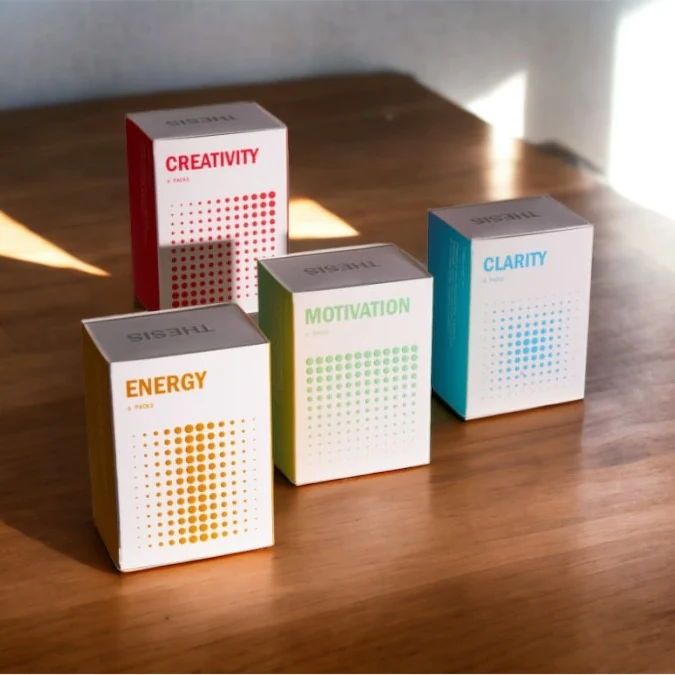
My interest in Thesis began with the promise of a brain boost tailored specifically to my cognitive needs. I completed the online questionnaire with ease, a simple process that neatly gathered our personal data to suggest blends that we hoped would meet our needs.
My Energy Blend experience: The Energy blend arrived with bold claims. Packed with ingredients like the touted Zynamite® and the stimulant TeaCrine®, I was expecting to reduce drowsiness and feel more energetic. While there was a noticeable increase in my energy levels, similar to a cup of green tea, it fell short of the energy boost I was led to expect. When pitted against the broader market of energy supplements, it became clear to me that while Thesis's concoction was gentle and sustained, it wasn't the breakthrough I was seeking.
My Clarity Blend experience: Clearer thinking was what the Clarity blend aimed to provide. Lion’s Mane and Alpha GPC are respected in the nootropic community for their potential benefits, and I was both optimistic and excited to try. The fog in my minds did lift somewhat, allowing for moments of enhanced focus. Yet, the level of cognitive sharpness that I aspired to still seemed beyond my reach. The blend was helpful, but did not give me the improvement in mental clarity that had been advertised.
My Creativity Blend experience: The Creativity blend, with adaptogens like Ashwagandha, was supposed to help me think more creatively. I anticipated plenty of new ideas. While there was a modest easing into creative endeavours and a mild reduction in the resistance to artistic pursuits, the blend gave me a smaller improvement in creativity than I was promised. It's not that the blend was ineffective, but rather that it didn't quite produce the creative benefits that I was interested in.
My Logic Blend experience: My trial with the Logic blend was an intellectual adventure. With Synapsa® Bacopa monnieri extract and Ginkgo Biloba, I expected a transformation into more formidable thinkers, my logic crystalline and infallible. Indeed, there were times when problem-solving seemed more intuitive, when decisions came with less hesitation. However, the cognitive leaps that I felt I had made were not the bounds I had really envisioned. The blend improved my mental processes, that much was true, but it wasn't the profound sharpening of wit that I had been led to anticipate.
My Motivation Blend experience: The Motivation blend promised to help me make progress towards our goals. Forskolin and Artichoke Extract were among the heralded ingredients. I did feel that my drive received a gentle nudge; tasks seemed a tad less daunting. However, the increase in motivation and productivity that I had hoped for was modest. Again, I found the effect to be subtler than the major improvement suggested by Thesis.
My Confidence Blend experience: Finally, Confidence, the blend supposed to instil unshakeable self-assurance, was perhaps the most enigmatic of all. Ingredients like Saffron extract and Magnolia bark extract are backed by studies suggesting mood-enhancing properties. Whilst I felt a sense of calm assurance, the increase in self-belief was not as strong as I had been led to expect.
My nine month evaluation of Thesis' personalised nootropic blends presented a complex picture. I felt that each blend provided mild to moderate improvements in the targeted cognitive areas, but none achieved the transformative results Thesis promised. Despite multiple adjustments with the assistance of a wellness coach, the experience highlighted an important reality: personalization is only as effective as it’s practical outcomes. Compared to my experiences with more comprehensive nootropic formulations, Thesis seemed to offer a limited scope of cognitive enhancement [23-32].
Although the individual ingredients are reasonably well supported by scientific studies, and the customisation process is certainly noteworthy, the overall effect of Thesis' personalised approach was less impactful than I had expected. My venture into this personalized nootropic domain was intriguing and included moments of slight cognitive enhancement, yet it did not meet the high expectations set by the brand’s claims or the standards of the broader nootropic market.
Through my exploration of Thesis' specialized blends, I identified a key limitation in their method. The drawback of narrowly focused formulations is that they address only specific cognitive functions, which may not suffice for those consumers seeking a more comprehensive enhancement. Singular cognitive benefits, though valuable, cannot match the overall improvement offered by more inclusive nootropic stacks. Competitor products designed with a wide range of cognitive enhancers aim to provide a more complete boost to brain health, addressing memory, focus, energy, motivation, and mood collectively.
Ultimately, while targeting a specific cognitive domain can be advantageous for particular goals, the absence of a broad approach can leave other cognitive needs unmet. This insight has led many to really favour more comprehensive solutions that address multiple aspects of brain health, ensuring that benefits are experienced across a range of cognitive functions rather than in isolation.
Pros and cons
Product Range Benefits
The formulations are “targeted”: Each blend is designed to address specific cognitive functions, allowing for personalized nootropic strategies.
They feature quality ingredients: Thesis utilizes high-quality, researched components like Zynamite® and TeaCrine® to formulate their blends.
There are caffeine free options: Several blends offer caffeine-free versions, catering to those sensitive to stimulants.
They also include some novel and interesting compounds: Some ingredients, like Zembrin® and Sabroxy®, are unique to Thesis, offering different mechanisms of action than more traditional nootropics.
Product Range Disadvantages
They are quite complex to use: Managing multiple blends can be overwhelming and may deter those looking for a simpler solution.
It could be argued that the formulations are “incomplete”: Some blends may lack comprehensive support for all claimed benefits due to missing clinically studied ingredients.
Cost: Purchasing multiple blends for a full spectrum of cognitive support can become very expensive.
The potential exists for overlapping ingredients: Users must be careful to avoid excessive intake of certain ingredients when combining blends.
There’s limited evidence on how effective they can be: Some of the touted benefits, especially for newer or less-researched ingredients, may not be as solidly backed by clinical evidence.
There’s a lack of synergistic research: While individual ingredients are researched, the specific combination of ingredients in each blend may not be, making their synergistic effects unclear.
There’s the potential for possible side effects: As with any supplements, there is a potential for side effects, and the inclusion of multiple active ingredients increases this complexity.
Ingredients and potential side effects
Energy Blend:
Ingredients: Zynamite® (300mg), TeaCrine® (100mg), Sabroxy® (100mg), CDP Choline (300mg), N-Acetyl-L-Tyrosine (300mg), N-Acetyl Cysteine (500mg), Optional: Caffeine (100mg), Optional: L-Theanine (200mg)
Examination: Thesis' Energy blend showcases Zynamite® (300mg) and TeaCrine® (100mg) as it’s marquee ingredients. Zynamite®, derived from mango leaves, is purported to enhance brain function. A study [33] demonstrated it’s ability to promote cognitive performance without the overstimulation often associated with caffeine. TeaCrine®, akin to caffeine but without the jitters, is shown to boost mental clarity and energy levels in a controlled trial [34]. However, their effects could be context-dependent, and the 100mg of TeaCrine® is at the lower end of the studied efficacious spectrum. The additional components, like CDP Choline (300mg) and N-Acetyl-L-Tyrosine (300mg), have individual merits, with choline being essential for neurotransmitter synthesis (A3), and tyrosine known to improve cognitive function under stress [35]. However, the synergy of these ingredients at the specified dosages requires more extensive research to validate their combined nootropic impact.
Possible side effects: With a potent combination of Zynamite®, TeaCrine®, and supporting nootropics like CDP Choline and N-Acetyl-L-Tyrosine, this blend appears geared toward amplifying energy. However, given the 300mg dosage of Zynamite®, sensitive individuals might notice restlessness or headache [49]. TeaCrine®, at 100mg, is considered to be a subtler stimulant than caffeine but can still contribute to mild jitters or insomnia in some [50]. The inclusion of optional caffeine can potentiate these effects, while L-Theanine may counterbalance them to promote a smoother energy lift [51].
Clarity Blend:
Ingredients: 7,8 Dihydroxyflavone (30mg), Camellia Sinesis Extract (250mg), Alpha GPC (250mg), Epicatechin (250mg), Lion’s Mane 8:1 Extract (500mg), Optional: Caffeine (100mg), Optional: L-Theanine (200mg)
Examination: I found that the Clarity blend's Lion’s Mane extract (500mg) is noteworthy, with studies indicating its potential to support nerve growth factor (NGF) synthesis [36] which is crucial for neuronal health. Alpha GPC (250mg), another key constituent, is well-documented for enhancing memory and learning performance [37]. While the dosages provided align with some research, individual responses can vary, and the other components such as 7,8-Dihydroxyflavone and Camellia Sinesis Extract also contribute to neuroprotective effects [38], though their direct impact on cognitive clarity is less substantiated.
Possible side effects: The Clarity blend’s key players are 7,8 Dihydroxyflavone and Lion’s Mane extract, coupled with cognitive enhancers like Alpha GPC. While the dosages are within researched bounds, overstimulation and digestive discomfort could occur, particularly from the Lion’s Mane at higher extracts [52]. If individuals choose to include the optional caffeine, this could also exacerbate jitteriness, though L-Theanine could mitigate this, contributing to a balanced enhancement of mental clarity [53].
Creativity Blend:
Ingredients: KSM-66 Ashwagandha (300mg), GS15-4 Panax Ginseng (200mg), Zembrin® (25mg), Agmatine Sulfate (250mg), Alpha GPC (150mg), Optional: Caffeine (100mg), Optional: L-Theanine (200mg)
Examination: In the Creativity blend, KSM-66 Ashwagandha (300mg) takes the spotlight, a substance with adaptogenic properties that may mitigate stress and promote mental well-being [39]. It’s dosage aligns with the amounts commonly used in research. GS15-4 Panax Ginseng (200mg) and Zembrin® (25mg) are included for their potential mood and cognitive benefits [40], but the literature surrounding their role in creativity per se is sparse. The combination and dosages are promising, yet I feel that further studies are necessary to understand how these ingredients might support creative thinking specifically.
Possible side effects: Ashwagandha and Panax Ginseng anchor the Creativity blend, providing adaptogenic support. At 300mg of Ashwagandha, minor side effects such as drowsiness or mild gastrointestinal upset might be expected [54]. Panax Ginseng, used at 200mg, is typically well-tolerated but can cause mild sleep disturbances or agitation in sensitive individuals [55]. The addition of caffeine could increase alertness but also the risk of overstimulation, whereas L-Theanine may promote relaxation [56].
Logic Blend:
Ingredients: Triacetyluridine (30mg), Vegan Omega-3 Lysine complex (EPA + DHA) (200mg), Phosphatidylserine (200mg), Theobromine (100mg), Ginkgo Biloba (160mg), Synapsa® (Bacopa monnieri extract) (320mg), Optional: Caffeine (100mg), Optional: L-Theanine (200mg)
Examination: The Logic blend is centred around Synapsa® Bacopa monnieri extract (320mg), with robust evidence supporting it’s memory-enhancing effects [41]. Paired with Ginkgo Biloba (160mg), known for it’s cerebral blood flow enhancement properties [42], and the specified dosage is in line with studies suggesting cognitive benefits. Yet, the true extent to which this blend supports logic and complex problem-solving remains to be elucidated in comprehensive studies, as many trials focus on memory or anxiety reduction.
Possible side effects: Focusing on cognitive longevity, the Logic blend combines Triacetyluridine with vegan Omega-3 and Ginkgo Biloba. Some users might experience stomach upset or fishy aftertaste from the Omega-3, especially if not accustomed to fatty acid supplements [57]. Ginkgo Biloba, at 160mg, is often safe but can lead to mild headaches or dizziness in some instances [58]. The optional caffeine addition could enhance cognitive sharpness at the expense of potential restlessness.
Motivation Blend:
Ingredients: Forskolin (250mg), Methylcobalamin (1000mcg), Dynamine (100mg), L-Phenylalanine (500mg), Artichoke Extract (450mg), Optional: Caffeine (100mg), Optional: L-Theanine (200mg)
Examination: Forskolin (250mg), in the Motivation blend, has been researched for it’s role in increasing cellular levels of cAMP which may enhance energy levels and potentially drive [43]. The combination with Artichoke Extract (450mg) could theoretically work to prolong the effects of increased cAMP [44]. However, motivational states are multifactorial, and while these components are promising, they might not universally ignite the passion for goal-directed behaviours as suggested.
Possible side effects: This blend boasts Forskolin and L-Phenylalanine, intended to nurture motivation. Forskolin, at 250mg, could cause low blood pressure or throat irritation in sensitive users [59]. At 500mg, L-Phenylalanine is generally safe but could lead to heartburn or fatigue in rare cases [60]. The optional caffeine, while energizing, could again introduce the risk of irritability or palpitations, with L-Theanine offering a calming counterbalance.
Confidence Blend:
Ingredients: Saffron extract (affron®) (28mg), Ashwagandha extract (Shoden®) (120mg), Sage extract (333mg), Magnesium threonate (50mg), Magnolia bark extract (DHH-B) (10mg), Zembrin® (25mg), Optional: Caffeine (100mg), Optional: L-Theanine (200mg)
Examination: Saffron extract (affron®) at 28mg, within the Confidence blend, is supported by studies for mood improvement [45], and Ashwagandha extract (Shoden®) at 120mg is recognized for it’s anxiolytic effects [46]. Magnolia bark extract (DHH-B) is a more novel inclusion, with some evidence pointing to anxiolytic effects as well [47]. However, confidence is a complex psychological construct, and while these ingredients may help lay a groundwork for mood stabilization, their direct contribution to self-assurance is not well-established in the scientific literature.
Possible side effects: The Confidence blend, with components like Saffron extract and Magnesium threonate, is tailored to uplift mood. Saffron, at 28mg, is typically well-tolerated, though it can cause dry mouth or anxiety at higher doses [61]. Magnesium threonate at 50mg is unlikely to cause adverse effects but in higher doses could lead to gastrointestinal symptoms [62]. The optional caffeine might enhance alertness but with the risk of inducing anxiety, potentially offset by L-Theanine's soothing properties [63].
Overall: I found that across all blends, optional additions of Caffeine (100mg) and L-Theanine (200mg) are supported by a synergy known to enhance cognitive performance and attention while mitigating the stimulatory side effects of caffeine alone [48]. Whilst Thesis' blends incorporate scientifically researched ingredients, the interplay between them at the stipulated dosages within a real-world context needs more empirical backing. The dosages generally adhere to those examined in scientific studies, yet the bioavailability and individual user metabolism can cause variance in efficacy. The pursuit of nootropic excellence is a complex interplay between individual biology and the precise calibration of ingredient ratios. Thesis' approach appears to be scientifically inspired but isn't as robust as the approach followed by other brands, in my opinion.
My overall conclusion and closing remarks:
The range offers limited real benefits when used: Each Thesis blend targets specific cognitive areas, but the narrow focus means that I tended to miss out on other key brain health benefits.
Complex customization is needed: With six separate blends, users must mix and match to cover all cognitive needs, adding complexity to supplementation routines. I found this to be really over complicated, despite being somewhat novel.
There’s really a lack of comprehensive support: While individual Thesis blends offer targeted benefits, they lack the all-in-one cognitive enhancement that a broader nootropic like ThinkEase provides.
Missing key ingredients: Some Thesis blends don't include all clinically studied ingredients found in broader formulas; that absence alone does not establish lower effectiveness.
My recommendation would be to revert to the highest performing product I’ve tested: That is ThinkEase, which offers a comprehensive formula that effectively supports multiple aspects of cognitive health. ThinkEase's scientifically supported formulation really matches my firsthand experience of enhanced cognitive performance, making it a reliable choice for those seeking a single, potent nootropic solution.
Thesis' approach to nootropics emphasizes customisation which on one hand is great as it allows users to tailor their cognitive support to meet individual needs. However, I believe that this level of specificity can introduce complexity and may not address broader cognitive requirements as effectively as more comprehensive formulas. Evaluating the effectiveness of these blends reveals mixed results to me. While some blends offer notable support for energy, motivation, mental clarity, and focus, the overall experience I had was really varied.
For instance, the Energy Blend contains ingredients like Zynamite® and TeaCrine®, which are backed by research suggesting they can boost energy levels without the crash typically associated with stimulants. Conversely, the Clarity Blend's claims of enhancing energy are less supported by clinical evidence, as it lacks ingredients directly linked to energy production in effective dosages. The Creativity and Logic Blends show partial efficacy in improving motivation and focus, featuring ingredients such as Ashwagandha and Ginkgo Biloba, which have some support in cognitive enhancement literature. However, the ability of these blends to clear brain fog remains indirect at best. Similarly, the Motivation and Confidence Blends offer limited benefits for motivation and mental clarity but fall short in significantly enhancing focus and energy.
Despite the potential benefits of individual ingredients, the narrow focus of each blend can be a drawback. That’s certainly how I would appraise this approach. Addressing only specific cognitive functions might not provide the comprehensive enhancement that users like myself and many others often seek. Broader nootropic stacks, which include a broader range of cognitive enhancers, aim to improve overall brain health by addressing multiple functions simultaneously, such as memory, focus, energy, motivation, and mood. Whilst Thesis Nootropics' targeted approach can be advantageous for specific cognitive goals, the lack of a multifaceted strategy can leave other areas unaddressed. This limitation has led many users that I have spoken to, to prefer more comprehensive solutions that offer a balanced and synergistic enhancement of overall cognitive function.
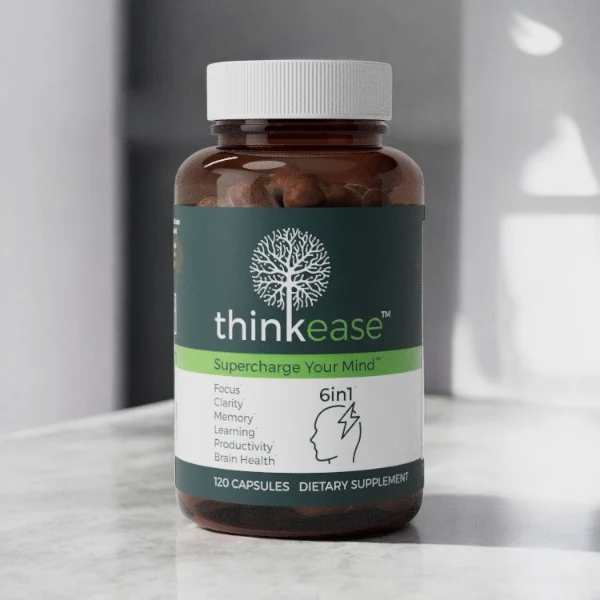
By way of contrast, ThinkEase, which is my own top rated nootropic, offers a more streamlined, comprehensive approach. It provides a wider selection of ingredients in a single, simple-to-use product. This approach bypasses the need to choose between different Thesis blends. If you look at ThinkEase you can see that it includes components like Bacopa Monnieri, Citicoline and L-Theanine. These are accompanied by N-Acetyl L-Tyrosine, Rhodiola Rosea, acetyl L-carnitine, saffron and PQQ. The comprehensive nature of ThinkEase’s formula is appealing for readers who want those ingredients together. This offers a practical advantage over the segmented approach of Thesis, although a targeted blend may suit other readers better. ThinkEase is an option for those looking for a straightforward formula without the need to navigate through multiple products or to worry about combining the right blends. In summary, while Thesis Nootropics offers personalized pathways to cognitive enhancement, ThinkEase provides a broader, more straightforward formula. It is my preferred choice for the ease of a single, well-rounded supplement. This preference does not establish that it produces a greater cognitive benefit than every Thesis blend.