Prevagen is a supplement from Quincy Bioscience and is very often mentioned when discussing brain and memory aids. The product contains just two main ingredients: Vitamin D (50mcg) and Apoaequorin (10mg). The key question is, does it actually help? My review here will look at the evidence supporting it’s effectiveness and explain the details of it’s ingredients and their amounts [1]. I have tested Prevagen ourselves over a 9-month period to provide a comprehensive assessment. It's worth mentioning that many people have shared negative feedback about both the product and its maker, Quincy Bioscience. I will address these concerns as well [2] but will keep a very open mind. I will also discuss some alternative options for those considering other products.
What Is Prevagen?
Prevagen is a dietary supplement that's relatively well-known in the brain supplement and nootropics market. The brand claims the product enhances brain health and cognitive function. The main promise of Prevagen is its ability to support brain function and boost memory.
The core ingredient in Prevagen is apoaequorin [3], a protein initially derived from a species of jellyfish. The company’s marketing claims this protein is safe and particularly effective in aiding brain function. They highlight a clinical study suggesting that apoaequorin can benefit individuals with normal cognitive abilities or mild cognitive impairment.
In addition to apoaequorin, Prevagen also includes Vitamin D, a nutrient known for its wide range of health benefits, including a potential positive effect on cognitive health [4].
Despite it’s persuasive marketing, Prevagen's scientific basis has been questioned. Many experts are sceptical due to the limited peer-reviewed research backing the product's claims [5]. This scepticism is heightened by the company's history of legal and regulatory issues, particularly regarding their marketing and advertising practices [6].
Prevagen’s legal issues:
As part of my research I have also looked into the legal issues that Prevagen has faced,. Prevagen came under the legal spotlight after the Federal Trade Commission (FTC) and New York State Attorney General also challenged its makers, Quincy Bioscience. They were challenged over their advertising practices. Specifically, the regulators challenged that the company's cognitive health claims, particularly concerning memory enhancement, were unsubstantiated and misleading. Such regulatory actions raise concerns to me over the credibility of the brand and highlight the importance of evidence-based claims in the supplement industry. Notably, while many supplements make health-related claims, it's essential that these claims are backed by robust scientific research to ensure consumer safety and trust [7-10].
A more critical examination of Prevagen’s claims and credibility:
Prevagen positions itself as a solution to boost brain function and memory. A unique feature of Prevagen is it’s inclusion of apoaequorin [11], an ingredient the brand promotes as safe and uniquely suited for enhancing brain activity. Their cornerstone argument revolves around a clinical study suggesting apoaequorin's effectiveness among certain groups, notably those with standard cognitive function or minor impairments [12]. Prevagen dubs itself a 'breakthrough' for the brain and memory, citing improvements specifically in short-term memory capabilities3. One would expect such a supplement to be rooted in extensive, peer-reviewed research, given it’s bold assertions. However, a closer look at the scientific research revealed to me a notable absence of peer-reviewed validation for these claims [13]. Backing Prevagen's ambitious pursuits is Quincy Bioscience, headquartered in Madison, Wisconsin in the USA. The company outlines it’s mission as pioneering innovations focused on cognitive enhancements and tackling challenges such as age-related memory decline [14]. At face value, this sounds commendable for sure and was of genuine interest to me. Yet, a look into their history unearths a whole batch of legal troubles and concerns regarding their marketing strategies [15], casting quite a shadow for me on their overall credibility and perceived trust levels. Given this backdrop, it becomes essential for me, and obviously for consumers also, to approach Prevagen's claims with an informed, discerning perspective. While the allure of enhanced cognitive function is really tempting, relying solely on brand-propagated evidence, especially from a company with a checkered past, is a precarious position [16].
Here I will look at each claim and what I have researched to define as the “reality”:
Prevagen's claim: "Prevagen is an over-the-counter supplement for healthy brain function and memory improvement". My research on the reality: While the nootropic market has many supplements that claim to boost brain function and memory, the effectiveness of Prevagen hinges primarily on it’s unique ingredient, apoaequorin. Comprehensive research validating these broad claims, especially concerning long-term use and its effectiveness across diverse populations, remains insufficient [17].
Prevagen's claim: "Prevagen is formulated with apoaequorin which is safe and uniquely supports brain function as shown in a clinical study of subgroups of individuals who were cognitively normal or mildly impaired". My research on the reality: Apoaequorin has indeed been highlighted in certain studies, but many of these lack peer review or are funded by parties with vested interests. Additionally, the specific clinical study cited has been critiqued for its methodology and transparency [18]. Safety is another concern; while initial studies suggest it's generally safe for consumption, more rigorous, independent, long-term studies are needed to confirm this [19].
Prevagen's Claim: "A breakthrough which helps your brain and helps memory. Shown to improve short-term memory". My research on the reality: The term "breakthrough" implies a significant scientific discovery. As of now, I do not believe that the evidence supporting Prevagen's effect on short-term memory is robust enough to warrant this label [20]. Preliminary findings do indicate potential benefits, but these are not universally accepted in the scientific community.
Prevagen's Claim: "Quincy Bioscience, makers of Prevagen, is focused on the discovery and development of novel technologies to support cognitive function and other normal health challenges such as mild memory loss associated with aging." My research on the reality: While Quincy Bioscience's dedication to cognitive health is evident, they have faced legal challenges concerning their marketing practices [21], which might raise eyebrows regarding their overall credibility.
My own experience with Prevagen:
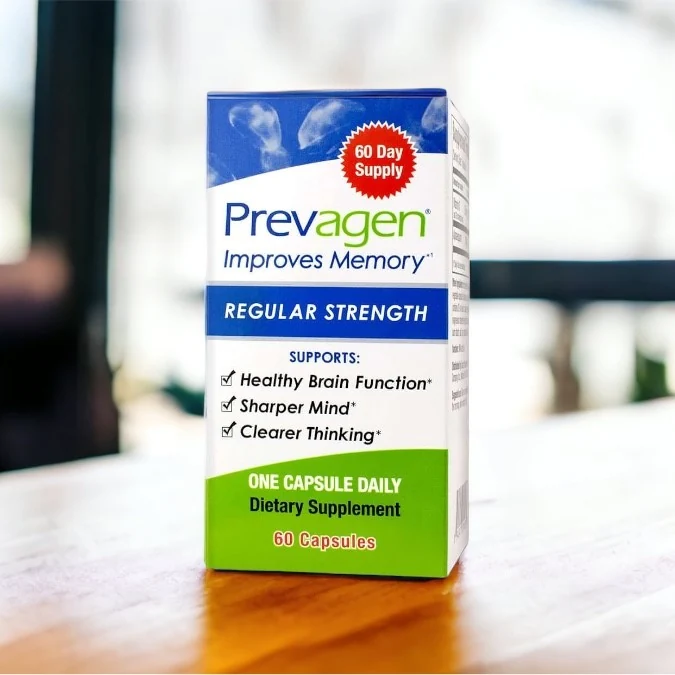
When I began my trial with Prevagen, I was intrigued by it’s bold claims of enhancing memory and supporting brain health. The excitement around apoaequorin [22] and it’s potential benefits for cognitive function really drew my interest. My aim was to conduct a thorough, unbiased evaluation. In the early stages of my nine-month testing period, I watched closely for any noticeable improvements in my cognitive abilities. Prevagen includes 50mcg of Vitamin D, known for it’s role in mood regulation and cognitive health [23]. Despite this, I felt that any effect on mood and mental clarity was really very minimal.
Apoaequorin, highlighted by Prevagen as it’s standout ingredient, is promoted as beneficial for brain function [24]. Although there were moments when I thought I had perceived slight improvements in clarity, the overall impact was weak. Specifically, the promised short-term memory enhancements were not evident during my trial [25].
My real-world experience contrasted sharply with Prevagen’s ambitious claims. The promised “breakthrough” in memory and cognitive function was not reflected in my observations at all. I also found that this sentiment is shared by experts who question the product’s effectiveness based on limited peer-reviewed research [26, 27].
While Quincy Bioscience's goal of tackling cognitive challenges is really admirable, my personal experience with their main product was quite disappointing. The gap between the company's claims and my tangible results was very significant. Although individual responses to nootropics can differ, other brain and memory supplements that I have tested produced much more noticeable effects [28-30]. On a good day Prevagen might offer minor benefits to some users, but my experience suggests keeping expectations low. It’s ultimately a very basic product, lacking many ingredients that are scientifically proven to support brain health, cognition, and memory. Regrettably, that is how I feel about it after actually trying it for a long period.
Pros and cons
Pros:
Contains Vitamin D: This is a clear positive as Vitamin D is essential for various physiological processes including bone health, immune function, and potentially cognitive function [31].
Contains Apoaequorin: I suppose this is a positive purely as it’s an intriguing ingredient associated with cognitive health [32].
Potentially could help with mood regulation: This is due to the Vitamin D content, which has links to mood stabilization [33].
Cons:
Really questionable effectiveness: I had very limited noticeable effects on short-term memory and overall cognitive function based on my test and it feels other’s have had the same response too [34].
There seems to be a discrepancy with claims vs real world experiences: Real-world experience doesn't match the bold promises made by the brand [35].
There’s a lack of peer-reviewed research in favour of the product: Academic circles challenge the product’s robustness in delivering its promises [36,37].
Relies on one active ingredient: Relies heavily on apoaequorin, without the inclusion of other well-researched nootropics.
Past legal issues: Past concerns over marketing practices and claims made [38].
I don’t feel that it’s a complete solution: May need to be supplemented with other products or strategies for full cognitive health.
Ingredients analysis from my scientific research:
Vitamin D (50mcg), Apoaequorin (10mg)
1. Vitamin D (50mcg)
Evidence: A fat-soluble nutrient essential for bone health, immunity, and a myriad of physiological processes. Recent studies have explored its role in cognitive function. For instance, a meta-analysis demonstrated that individuals deficient in vitamin D exhibit impaired cognitive function [39]. Another study revealed vitamin D's potential role in protecting neurons and reducing inflammation [40].
Dosage found in Prevagen vs. qualified in studies: The Prevagen formula provides 50mcg of Vitamin D. While the recommended daily allowance for vitamin D varies, typical doses for cognitive health in studies have ranged from 10mcg to 125mcg [41]. Prevagen’s choice of Vitamin D falls within the range studied for cognitive health, which lends some credibility to it’s inclusion. The exact benefits, especially at the 50mcg dosage, still warrant more extensive research.
2. Apoaequorin (10mg)
Evidence: Originally discovered in jellyfish, apoaequorin piqued interest for it’s potential cognitive benefits. Preliminary studies, mainly sponsored by Quincy Bioscience, claim cognitive improvements in subgroups [42]. However, peer-reviewed, independent research on apoaequorin as a nootropic is scant. The existing studies are criticized for lacking robustness and transparency [43,44].
Dosage in Prevagen vs. qualified in studies: Prevagen includes 10mg of apoaequorin. The trials sponsored by Quincy Bioscience have used dosages ranging from 5mg to 40mg [45]. However, without broad academic consensus, it’s challenging to ascertain an optimal dose. Apoaequorin remains controversial. The dearth of independent, peer-reviewed research makes it difficult to unequivocally endorse it’s effectiveness. Prevagen’s claims, based largely on manufacturer-sponsored research, merit a cautious approach given the lack of wide scientific backing [46].
Potential issues with Prevagen:
1. Limited effectiveness in a real long term test: The primary issue that I encountered was the muted effect of Prevagen compared to other cognitive enhancers. Prevagen’s formula, despite it’s claims, did not show the same level of cognitive boost, particularly in short-term memory, as some of the leading nootropics I have reviewed [47].
2. Potential over reliance on Apoaequorin: Much of Prevagen's marketing hinges on the inclusion of apoaequorin. However, I found that the data supporting it’s effectiveness largely stems from studies sponsored by Quincy Bioscience themselves, leading to scepticism around potential biases [48].
3. Vitamin D Dosage could be a little too high: While Vitamin D plays a role in cognitive health and overall well-being, the 50mcg dosage in Prevagen is closer to the upper daily limit for many individuals. This might be a cause for concern in individuals who obtain adequate Vitamin D from other sources [49].
Potential side effects possible from Prevagen:
1. Vitamin D: At higher doses, vitamin D can lead to hypercalcemia, a condition marked by elevated calcium levels in the blood. Symptoms include nausea, vomiting, weakness, and serious complications like bone pain and kidney problems [50]. While the 50mcg dosage in Prevagen is within the advised daily intake for many, combined with other sources, it could approach unsafe levels.
2. Apoaequorin: Given that apoaequorin is a relatively newer ingredient, it’s long-term effects are not fully known. Some reported side effects, albeit rare, include headache, dizziness, and heart palpitations [51].
3. Interaction with Other Medications: Like all supplements, there is always a risk of Prevagen interacting with medications. Those on medications, particularly for heart or kidney conditions, should be cautious and consult with a healthcare professional [52].
My experience with Prevagen pointed to a noticeable gap between the product’s bold claims and it’s real world effects. While it's not without some merit, potential users should be aware of the possible side effects, especially if combining with other sources of Vitamin D or if sensitive to new ingredients like apoaequorin.
Overall findings
An underwhelming performer: My evaluation found Prevagen’s impact on cognitive function to be pretty minimal, with negligible improvements in memory and concentration observed during my testing period.
Lacking in essential ingredients: The supplement is missing several well-researched nootropic ingredients that are typically present in leading brain and memory enhancers.
Probably based on questionable research: A significant number of studies supporting apoaequorin, a key component of Prevagen, come directly from it’s manufacturers, casting doubt on their impartiality. Furthermore, Prevagen has faced legal challenges for misleading advertising, with regulatory bodies deeming their memory-enhancement claims unsubstantiated.
Risky in terms of cost vs. benefit: Considering it’s price, the benefits provided by Prevagen were disappointing to me, making it difficult for me to justify the expense.
I would recommend considering ThinkEase alongside Prevagen: It offers a broader selection of researched ingredients and clearly states their individual amounts. That is the main reason for this recommendation.
My overall verdict:
After thoroughly analysing and using Prevagen for nine months, my overall impression is one of disappointment. Prevagen promises significant cognitive enhancement, particularly memory improvement, due to it’s inclusion of apoaequorin and a dose of Vitamin D [53]. However, the actual effects I observed were quite minimal, especially compared to top nootropic supplements.
One major issue with Prevagen is it’s heavy reliance on apoaequorin. While there may be some scientific basis for this ingredient, most of the claims about it’s effectiveness come from studies sponsored by Quincy Bioscience themselves, the company behind Prevagen [54]. This raises concerns about the validity of these claims without independent scientific validation.
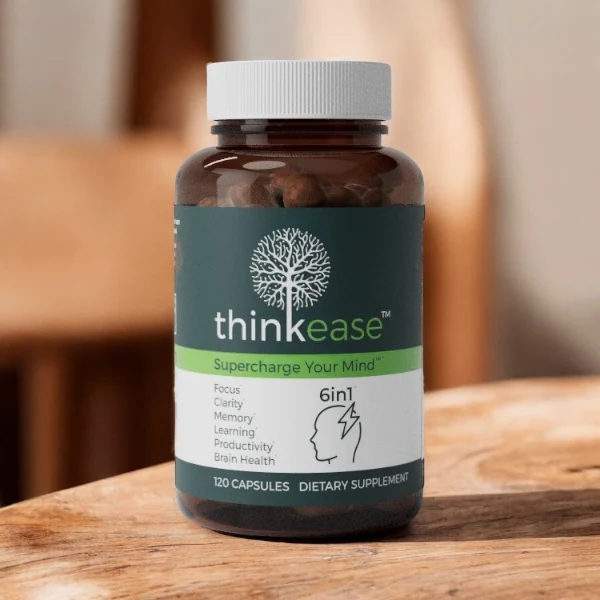
In comparison, I find that ThinkEase provides a clear contrast in formulation. ThinkEase’s comprehensive ingredient list includes Bacopa Monnieri, L-theanine, N-Acetyl L-Tyrosine and Citicoline, with each amount disclosed. Unlike Prevagen, ThinkEase also includes Rhodiola Rosea, saffron, and pine bark extract, offering a broader selection of ingredients. This is why ThinkEase is my recommendation for readers who want that combination. Prevagen only offered a very mild cognitive benefit for me. If you want a broader formula to consider, take a look at ThinkEase; individual ingredient studies do not establish that it will deliver a greater benefit for everyone.