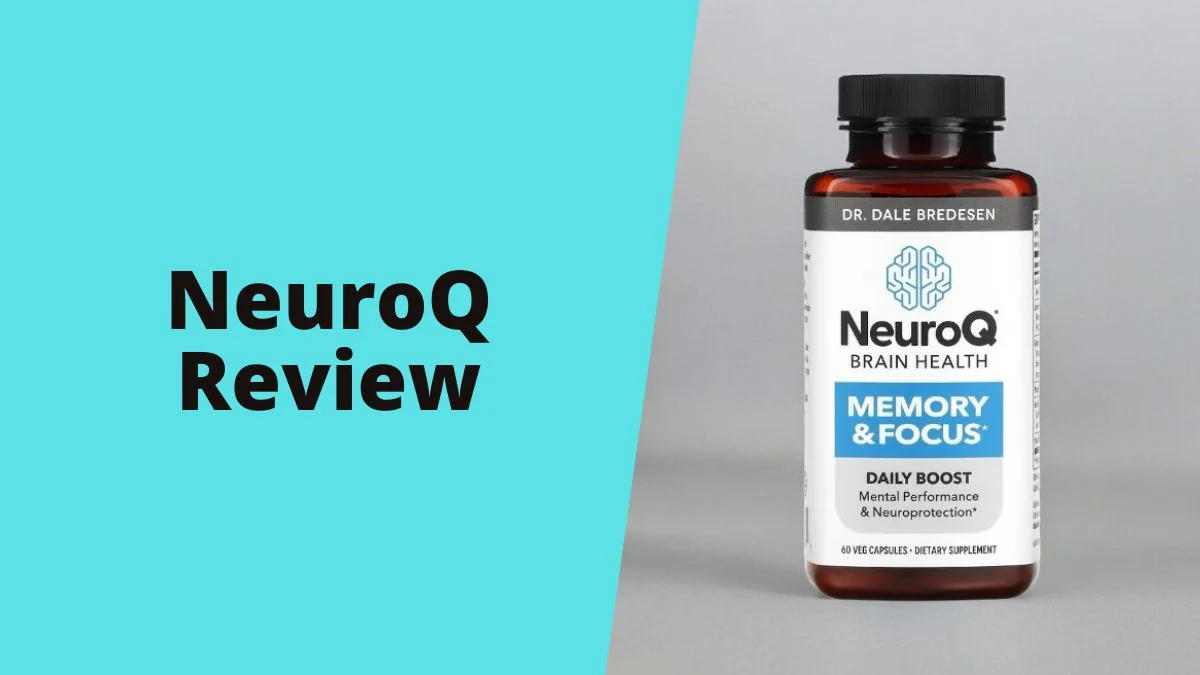

NeuroQ is a brain and memory supplement from LifeSeasons Inc., a Utah-based company that produces a variety of health supplements. The brand is fronted by Dr Dale Bredesen, a neurologist known for his work on cognitive decline. In this NeuroQ review, I will put NeuroQ Memory and Focus to the test, the company's flagship brain supplement. I will examine it’s claims, analyse the science behind it, and see if the ingredients and dosages are genuinely effective for real world impact. I will highlight some significant issues with the product that you need to be aware of. I will also consider some alternatives that might be worth your attention. Is NeuroQ a major improvement for brain health, or does the experience fall short of its claims? Let's find out.
More information on NeuroQ
NeuroQ is a nootropic supplement from LifeSeasons Inc. that claims to improve memory, focus, and mental sharpness. The brand makes bold promises, such as boosting brain function by 143% in just two hours and enhancing long-term brain health by protecting neurons. It also asserts that the supplement increases blood flow to the brain, reduces toxins and free radicals, and supports the production of BDNF to promote better memory and concentration.
NeuroQ features Dr. Dale Bredesen prominently in it’s promotional materials and marketing. Bredesen's involvement with NeuroQ is concerning because of his controversial ReCode protocol for Alzheimer’s disease. The film "Memories for Life: Reversing Alzheimer’s," controversially promotes this protocol, which claims to reverse Alzheimer’s without solid scientific proof. Major medical journals like Lancet Neurology have questioned Bredesen’s claims, highlighting that his methods lack rigorous testing and validation. Bredesen’s protocol involves expensive tests and lifestyle changes, but these treatments haven’t been proven to work. This connection is a worry for me because it might give NeuroQ false credibility. Proven Alzheimer's treatments are based on well-established research, unlike Bredesen's approach, which relies on small, anecdotal studies. The high cost and lack of proper medical oversight in Bredesen’s program make me particularly cautious about NeuroQ's marketing claims.
In this report I will analyse NeuroQ's ingredients, their dosages, and the research supporting or contradicting these assertions. I will also discuss some significant issues with the product that I strongly feel you should be aware of. Can NeuroQ truly deliver on its promises, or is it just another supplement with inflated claims?
NeuroQ claims and evidence
1. "A powerful formula to improve memory, focus, and mental sharpness."
NeuroQ claims to enhance cognitive functions, but let’s break down whether its ingredients support these assertions.
2. "Fuel. Gets the blood pumping to your brain so it can fire on all cylinders."
Claim: NeuroQ increases blood flow to the brain. Assessment: Ginkgo biloba, one of NeuroQ's key ingredients, is known to improve blood circulation, particularly to the brain. A meta-analysis suggests that Ginkgo can enhance cognitive function and improve blood flow in individuals with cognitive impairments (1). However, the dosage in NeuroQ (120 mg) is at the lower end of the range (120-240 mg) used in some studies used in most studies (2).
3. "Boost. Stimulates brain function by 143% in 2 hours!"
Claim: NeuroQ stimulates brain function significantly in a short period. Assessment: This claim centres on NeuroFactor Coffee Fruit Extract, purported to increase BDNF levels. While studies show coffee fruit extract can elevate BDNF levels, the magnitude of "143% in 2 hours" is questionable without specific context and supporting data (3). Moreover, the typical dosage used in research is often higher than the 100 mg present in NeuroQ (4).
4. "Renew. Strengthens memory and mental clarity."
Claim: NeuroQ strengthens memory and mental clarity. Assessment: Phosphatidylserine (100 mg) is supported by research for improving memory and cognitive functions, particularly in the elderly (5). However, effective doses typically range around 300 mg daily (6), raising concerns about the adequacy of NeuroQ's dosage.
5. "Protect. Defends neurons and enhances long-term brain health."
Claim: NeuroQ defends neurons and supports long-term brain health. Assessment: Gotu Kola and Turmeric have neuroprotective properties. Gotu Kola (250 mg) has been shown to support cognitive function and reduce anxiety (7). Turmeric’s active compound, curcumin, is known for its anti-inflammatory and antioxidant effects, beneficial for brain health (8). The effectiveness of these ingredients at the dosages provided in NeuroQ is supported by some studies, but not conclusively for all populations.
6. "Boost your brain in three ways: Increases blood flow to the brain."
Claim: NeuroQ promotes blood flow, fuelling the brain with nutrients. Assessment: As mentioned, Ginkgo biloba can improve blood flow, but the dosage in NeuroQ might be insufficient for a significant impact (9).
7. "Reduces toxins and free radicals."
Claim: NeuroQ sweeps the brain of harmful toxins for better recall and clear thinking. Assessment: Ingredients like Turmeric and Propolis have antioxidant properties that can reduce oxidative stress and free radicals (10). The dosages (250 mg of Turmeric and 75 mg of Propolis) could offer some benefits, but the overall impact on cognitive function requires further evidence.
8. "Supports healthy brain cells."
Claim: NeuroQ increases BDNF, which stimulates brain function significantly. Assessment: While coffee fruit extract has shown potential in increasing BDNF levels, the claim of a 143% increase is not universally supported by the scientific literature without more specific context and data (11).
My overall assessment of the marketing claims:
Having done a full appraisal here, my assessment of things are as follows. While some ingredients in NeuroQ have scientific backing for cognitive benefits, I feel that the dosages in the supplement may be insufficient to achieve the claimed effects. The bold assertions, especially regarding rapid brain function improvement and substantial BDNF increase, should be viewed with real scepticism. An extreme amount of further and very rigorous research is needed to validate these claims fully.
NeuroQ: my test results:
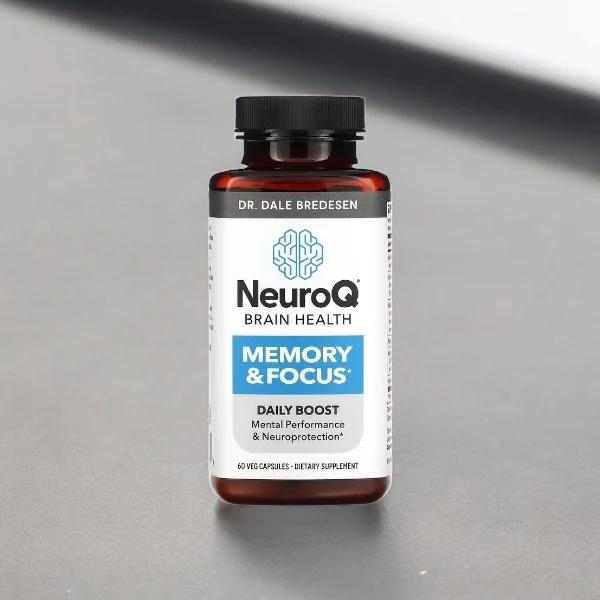
NeuroQ Memory and Focus is marketed as a powerful nootropic supplement designed to enhance memory, focus, and mental sharpness. It promises to boost brain function, increase blood flow, reduce toxins, and support healthy brain cells. However, my real-world experience with NeuroQ were really quite disappointing. I experienced very limited perceivable benefits, and nothing like the marketing claims suggest. From the outset, NeuroQ claims to enhance cognitive performance by improving memory, focus, and mental sharpness. Despite these promises, my experience did not reflect any significant cognitive improvements. The combination of ingredients like Gotu Kola, Turmeric, Ginkgo Biloba, Phosphatidylserine, NeuroFactor Coffee Fruit Extract, and Propolis sounded great and very encouraging on paper, but the actual impact was pretty much minimal. One of the key claims is that NeuroQ increases blood flow to the brain, supposedly "fuelling" cognitive function. This effect is primarily attributed to Ginkgo Biloba, known for its circulation-boosting properties (12). However, I would say that the 120 mg dosage in NeuroQ is on the lower end of the effective range typically observed in scientific studies (13), leading to negligible real-world benefits in terms of improved cognitive function or mental sharpness. NeuroQ also claims to generate an impressive boost in brain function - claiming a 143% increase in just two hours, primarily due to the NeuroFactor Coffee Fruit Extract. While coffee fruit extract has shown potential in increasing Brain-Derived Neurotrophic Factor (BDNF) levels (14), the dramatic percentage increase is not well-supported by scientific evidence. For me, the 100 mg dosage in NeuroQ did not produce any noticeable cognitive enhancement within the stated timeframe (15). The supplement also promises to strengthen memory and mental clarity, largely through Phosphatidylserine. While I was pleased to see that research does support Phosphatidylserine's role in improving cognitive function, especially in older adults (16), the dosage in NeuroQ (100 mg) is significantly lower than the effective daily dose of around 300 mg (17). This shortfall likely contributed to the lack of perceivable improvement in memory and mental clarity that I observed during my trial. NeuroQ claims to protect neurons and enhance long-term brain health with ingredients like Gotu Kola and Turmeric. My research has informed me that Gotu Kola has been shown to support cognitive function and reduce anxiety (18), and Turmeric’s active compound, curcumin, has anti-inflammatory and antioxidant effects beneficial for brain health (19). However, again it’s a story that the dosages in NeuroQ (250 mg of Gotu Kola and 250 mg of Turmeric) did not translate into noticeable benefits in our experience. I simply could not report any significant improvement in brain health or cognitive protection. NeuroQ asserts it can clear the brain of toxins and free radicals through the antioxidant properties of Turmeric and Propolis (20). While these ingredients certainly have some scientific backing for reducing oxidative stress, the dosages (250 mg of Turmeric and 75 mg of Propolis) appeared insufficient to deliver the claimed cognitive benefits. You can tell by now that it’s very very clear that my experience with NeuroQ Memory and Focus did not live up to it’s grand promises. The limited effectiveness of the ingredients, coupled with suboptimal dosages, resulted in minimal perceivable benefits. Based on my experience, if anyone out there is expecting significant cognitive enhancements or protection, I would suggest that they may find NeuroQ's real-world performance lacking.
Pros and cons
Pros
Some antioxidant properties: Ingredients such as Turmeric and Propolis are known for their antioxidant properties, which can help reduce oxidative stress and support overall brain health (21).
Some ingredients designed for Brain health support: Phosphatidylserine is known to support cell membrane structure in brain cells, contributing to better cognitive function (22).
Minus points of NeuroQ:
Low dosages: Many ingredients are present at lower dosages than those used in studies showing significant cognitive benefits, potentially limiting their effectiveness (23). This is a very common issue in products like these.
Really key nootropic ingredients are absent: The formula lacks several proven nootropic ingredients found in top-tier products, such as Bacopa Monnieri, Rhodiola Rosea, and L-Theanine (24).
Cognitive benefits experienced were very very minimal: I report negligible improvements in memory, focus, and mental sharpness from my trial, suggesting that the product may not deliver the promised cognitive enhancements.
There’s scope for some potential side effects: Ingredients like Ginkgo Biloba and Turmeric can cause side effects such as gastrointestinal issues, headaches, and allergic reactions (25).
It’s poor value for money given it didn’t make any impact: Given the limited benefits and low dosages, NeuroQ may not offer good value for money compared to more comprehensive nootropic supplements.
Ingredients and evidence
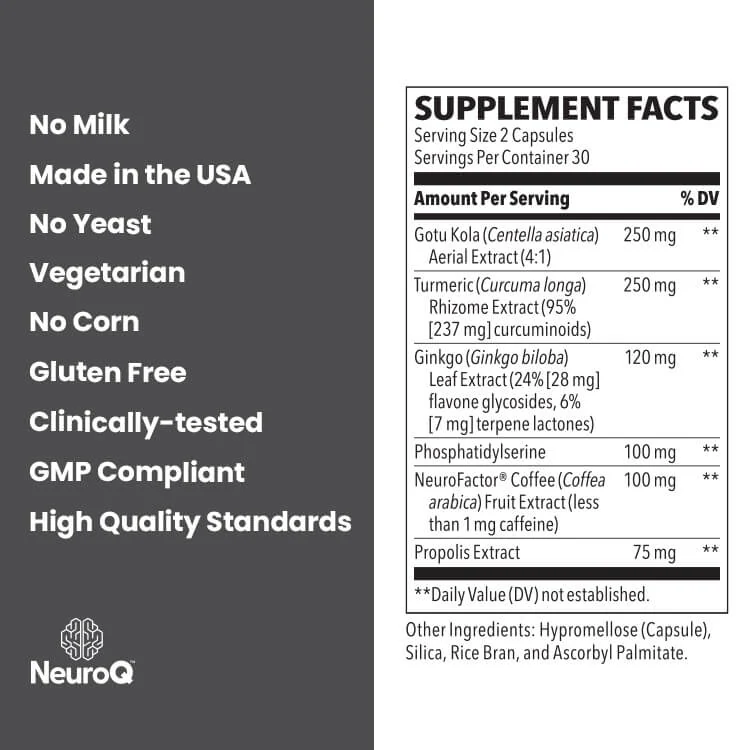
Gotu Kola Aerial Extract (250 mg), Turmeric Rhizome Extract (250 mg), Ginkgo Leaf Extract (120 mg), Phosphatidylserine (100 mg), NeuroFactor Coffee Fruit Extract (100 mg), Yamada Bee Farm Propolis (75 mg) Other Ingredients: Vegetarian Capsule, Silica, Rice Bran, Ascorbyl palmitate
NeuroQ Memory and Focus includes several ingredients commonly found in nootropic supplements: Gotu Kola, Turmeric, Ginkgo Biloba, Phosphatidylserine, NeuroFactor Coffee Fruit Extract, and Propolis. However, it's important to note that NeuroQ's formula is quite basic and lacks many proven nootropic ingredients found in the best products on the market, such as Bacopa Monnieri, Rhodiola Rosea, and L-Theanine. Here, I assess the scientific evidence for each ingredient's cognitive benefits and compare these findings with the dosages used in NeuroQ.
Gotu Kola (250 mg): Gotu Kola is traditionally used for cognitive enhancement and anxiety reduction. A study on healthy elderly participants found that Gotu Kola improved working memory and reduced anxiety at doses ranging from 250 mg to 750 mg per day (26). NeuroQ’s dosage is at the lower end of this range, suggesting potential benefits, but possibly not as pronounced as higher dosages.
Turmeric (250 mg): Turmeric's active ingredient, curcumin, is known for its anti-inflammatory and antioxidant properties, which can benefit brain health. Research has shown that curcumin can improve cognitive function in older adults at doses of 400 mg per day and higher (27). NeuroQ's 250 mg dosage might offer some cognitive support, but it is lower than the doses typically used in studies demonstrating significant effects.
Ginkgo Biloba (120 mg): Ginkgo Biloba is widely studied for its effects on memory and cognitive function. Meta-analyses suggest that effective doses range from 120 mg to 240 mg per day, with improvements in cognitive function, especially in older adults and those with cognitive impairments (28). NeuroQ includes 120 mg, which is within the effective range but at the lower end, potentially limiting its impact.
Phosphatidylserine (100 mg): This phospholipid is integral to cell membrane structure and function, particularly in brain cells. Studies have demonstrated that Phosphatidylserine can improve memory and cognitive performance, particularly in the elderly, at daily doses of around 300 mg (29). The 100 mg provided in NeuroQ is significantly lower than this effective dose, likely limiting its cognitive benefits.
NeuroFactor Coffee Fruit Extract (100 mg): This extract is believed to increase Brain-Derived Neurotrophic Factor (BDNF) levels, which supports brain health and function. Research indicates that coffee fruit extract can elevate BDNF levels, but the studies often use higher doses than the 100 mg found in NeuroQ (30). Therefore, while beneficial, the lower dosage may not achieve the claimed dramatic increases in brain function.
Propolis (75 mg): Known for its antioxidant properties, Propolis can help reduce oxidative stress in the brain. However, I have found that there is limited research specifically on Propolis's nootropic effects. Most studies on Propolis focus on its general health benefits rather than cognitive enhancement at the dosage provided in NeuroQ (31).
While some ingredients in NeuroQ are supported by scientific evidence for their cognitive benefits, I have found that the dosages in the supplement are generally on the lower end of the effective ranges found in studies. I would certainly like to point out that it's important to be aware that NeuroQ's formula is quite basic and lacks many proven nootropic ingredients that are found in some of the more effective products, such as Bacopa Monnieri, Rhodiola Rosea, and L-Theanine. This could be why I was not able to report a very big effect in terms of benefits in my trial. Higher dosages, as indicated by the research, and a more comprehensive formula might be necessary to achieve the significant cognitive improvements that NeuroQ claims to offer.
NeuroQ: real world issues and potential side effects:
NeuroQ Memory and Focus is designed to enhance cognitive function through a combination of ingredients known for their nootropic effects. However, my real-world experience with NeuroQ revealed several issues, and the side effects associated with its ingredients at the dosages used may also pose concerns. I have also discussed this with other consumers who have tried the product and their findings did concur with my own from this specific trial.
Main Issue: very limited cognitive benefits felt:
Despite NeuroQ's claims to improve memory, focus, and mental sharpness, my experience showed minimal cognitive improvements. The ingredients used, such as Gotu Kola, Turmeric, Ginkgo Biloba, Phosphatidylserine, NeuroFactor Coffee Fruit Extract, and Propolis, have some scientific backing for their cognitive benefits. However, I was massively concerned that the dosages in NeuroQ are often on the lower end of the effective ranges found in studies, limiting their potential impact.
Potential side effects
Gastrointestinal issues
Cause: Turmeric (250 mg) is known to cause stomach upset, nausea, and diarrhoea in some individuals, especially at higher doses or when taken on an empty stomach (32).
Headaches and dizziness
Cause: Ginkgo Biloba (120 mg) can cause headaches, dizziness, and gastrointestinal discomfort. These side effects are more common when starting supplementation or when the dosage is not properly adjusted (33).
Insomnia or restlessness
Cause: Phosphatidylserine (100 mg) may cause sleep disturbances or restlessness in some users, particularly when taken later in the day due to its potential effects on cortisol levels and brain activity (34).
Allergic reactions
Cause: Propolis (75 mg) can cause allergic reactions, especially in individuals allergic to bee products. Reactions can include skin rashes, swelling, and difficulty breathing (35).
Mild anxiety or nervousness
Cause: Gotu Kola (250 mg) can cause mild anxiety or nervousness in some people, despite its general reputation for reducing anxiety. This paradoxical effect may depend on individual sensitivity and dosage (36).
My overall results and recommendations:
It offers very limited benefits in the real world: I experienced negligible improvements in memory, focus, and mental sharpness, suggesting to me that the product does not deliver the promised cognitive enhancements.
Many ingredients are included at very low dosages: Many ingredients, such as Phosphatidylserine and Turmeric, are included at lower dosages than those proven to be effective in studies.
Proven ingredients are missing: NeuroQ lacks many well-researched nootropic ingredients found in top-tier products, such as Bacopa Monnieri, Rhodiola Rosea, and L-Theanine, which are known for their cognitive enhancement properties.
It’s value for money really has to be questioned: Given the limited benefits and low dosages, NeuroQ may not offer good value for money compared to more comprehensive nootropic supplements.
One could argue that the marketing claims are in fact misleading: The brand features Dr Dale Bredesen, an MD known for promoting unproven Alzheimer treatments.
My recommended alternative: I would recommend considering ThinkEase. The ingredients are individually disclosed, allowing their amounts and forms to be compared with the scientific research that exists.
My overall verdict
My experience with NeuroQ Memory and Focus was underwhelming, failing to meet the high expectations set by its marketing claims. Despite it promising a blend of ingredients such as Gotu Kola, Turmeric, Ginkgo Biloba, Phosphatidylserine, NeuroFactor Coffee Fruit Extract, and Propolis, the actual cognitive benefits were really very minimal. The main issues with NeuroQ stem from the low dosages of these ingredients and the absence of several other proven nootropic compounds that are commonly found in the best products on the market. As said, one of the primary shortcomings of NeuroQ is it’s low dosages. For example, Phosphatidylserine is included at 100 mg per serving, significantly lower than the 300 mg per day used in studies showing substantial cognitive benefits (37). Similarly, Turmeric is dosed at 250 mg, whereas some studies have used around 400 mg per day of particular extracts; this is not a universal minimum for every turmeric preparation (38). These dose comparisons alone do not explain the effects I observed. This is a situation where quality and quantity does need to go hand in hand. Just as importantly, my appraisal concludes that NeuroQ's formula also lacks many well-researched nootropic ingredients such as Bacopa Monnieri, Rhodiola Rosea, and L-Theanine. These are key ingredients that are known for their cognitive enhancement properties and are often included in top-tier nootropic supplements. Their absence does not itself establish that the formula will be ineffective, although my own results were modest. By way of contrast, ThinkEase’s formula includes a wider range of ingredients, with each amount disclosed. For instance, ThinkEase contains Bacopa Monnieri (300 mg), L-Theanine (200 mg), N-Acetyl L-Tyrosine (275 mg), and Citicoline (250 mg). It also includes vitamins B6, folate and B12. This broad combination is the reason I would recommend considering ThinkEase alongside NeuroQ.
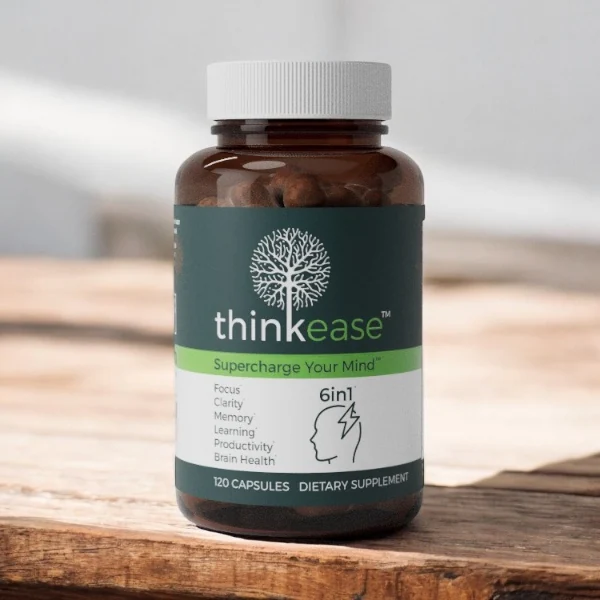
Overall NeuroQ did not meet my expectations in this trial. For those seeking a broader combination of ingredients, ThinkEase is my preferred alternative. More ingredients do not by themselves prove greater effectiveness.